CNC Machining Materials Guide Selecting the Right Material for Your Project
The material selection for a CNC machined part determines the mechanical properties, the surface finish quality, the achievable tolerances, the cutting speed, and the total cost of the component. Each engineering material has a specific combination of strength, hardness, machinability, corrosion resistance, and cost that makes it optimal for certain applications and unsuitable for others. Understanding these material characteristics is essential for engineers designing parts and buyers evaluating supplier quotes, because specifying the wrong material can result in parts that are too expensive, too heavy, too weak, or impossible to machine to the required tolerances. The most commonly machined materials include aluminum alloys, steel grades, stainless steels, titanium, brass, copper, and engineering plastics, with each category serving distinct application requirements.
Aluminum alloys are the most commonly machined materials because of their excellent machinability, good strength-to-weight ratio, and low cost relative to other machinable metals. Aluminum 6061-T6 is the standard workhorse for general purpose machined parts, offering a tensile strength of 45,000 psi, a yield strength of 40,000 psi, and a Brinell hardness of 95, combined with chip formation that produces small, easily evacuated chips at cutting speeds of 800 to 1500 surface feet per minute. Aluminum 7075-T6 offers higher strength at 83,000 psi tensile and 73,000 psi yield, comparable to some steel alloys at one third the weight, making it the preferred material for aerospace structural components that must withstand high loads without adding weight. Aluminum 2024-T4 is used for aircraft skins and structures where fatigue resistance is critical. The machinability of aluminum allows cnc turning services to achieve surface finishes of Ra 0.4 micrometers or better in a single finishing pass, with cycle times that are 3 to 5 times faster than steel for the same part geometry.
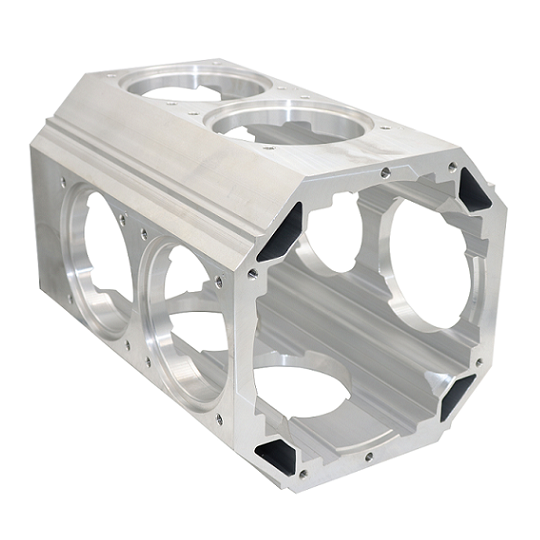
| Material | Tensile Strength | Machinability | Relative Cost | Best For |
|---|---|---|---|---|
| Aluminum 6061-T6 | 45,000 psi | Excellent | 1x (baseline) | General purpose parts, enclosures, brackets |
| Aluminum 7075-T6 | 83,000 psi | Good | 1.8x | Aerospace structures, high-stress frames |
| Steel 1018 | 55,000 psi | Good | 0.6x | Low-cost steel parts, shafts, pins |
| Steel 4140 | 95,000 psi | Fair | 0.8x | High-strength gears, shafts, tooling |
| Stainless 304 | 85,000 psi | Fair | 2.0x | Corrosion resistant components, food equipment |
| Stainless 316 | 84,000 psi | Fair-Poor | 2.5x | Marine, chemical, medical environments |
| Titanium Ti-6Al-4V | 135,000 psi | Poor | 5.0x | Aerospace, medical implants, racing |
| Brass C360 | 58,000 psi | Excellent | 2.5x | Valves, fittings, decorative hardware |
Steel and stainless steel offer higher strength and hardness than aluminum at the cost of slower machining speeds and shorter tool life. Low carbon steel grades such as 1018 and 12L14 machine relatively easily with chip formation that produces consistent chips at cutting speeds of 300 to 500 surface feet per minute, while alloy steels such as 4140 and 4340 require lower speeds of 200 to 400 SFM and produce higher cutting forces that demand rigid machine tools and fixtures. Stainless steel grades are the most challenging commonly machined materials because of their work hardening tendency, poor thermal conductivity, and high cutting forces. Austenitic stainless steels such as 304 and 316 work harden rapidly under the cutting surface, requiring aggressive feed rates to keep the cutting edge below the work hardened zone and preventing conditions where the tool rubs instead of cutting. The machinability rating of stainless 304 is approximately 45 percent that of aluminum 6061, meaning that custom cnc parts in stainless steel cost approximately twice as much as the same part in aluminum due to the longer cycle time and reduced tool life.
Engineering plastics such as Delrin acetal, Nylon 6/6, PEEK, PTFE, and acrylic offer unique material properties that metals cannot provide. Delrin provides excellent dimensional stability and low moisture absorption, making it the preferred material for precision mechanical components such as gears, bushings, and pump impellers that must maintain their dimensions in humid environments. PEEK offers high temperature resistance up to 480 degrees Fahrenheit and excellent chemical resistance, making it the material of choice for medical implants and semiconductor processing components where contamination resistance is critical. PTFE provides the lowest coefficient of friction of any solid material at 0.04 against polished steel, and is used for seals, bearings, and non-stick surfaces in chemical processing equipment. Plastic machining requires sharp tooling, positive rake angles, and adequate chip evacuation to prevent the material from melting or gumming on the cutting edge. The material cost for engineering plastics ranges from 3 dollars per pound for Delrin to 80 dollars per pound for PEEK, which must be factored into the part cost calculation because the material waste in machining is typically 50 to 70 percent of the original stock.


Post Comment